E Ink Sustainable|E Ink ESG Website

Corporate Risk Management

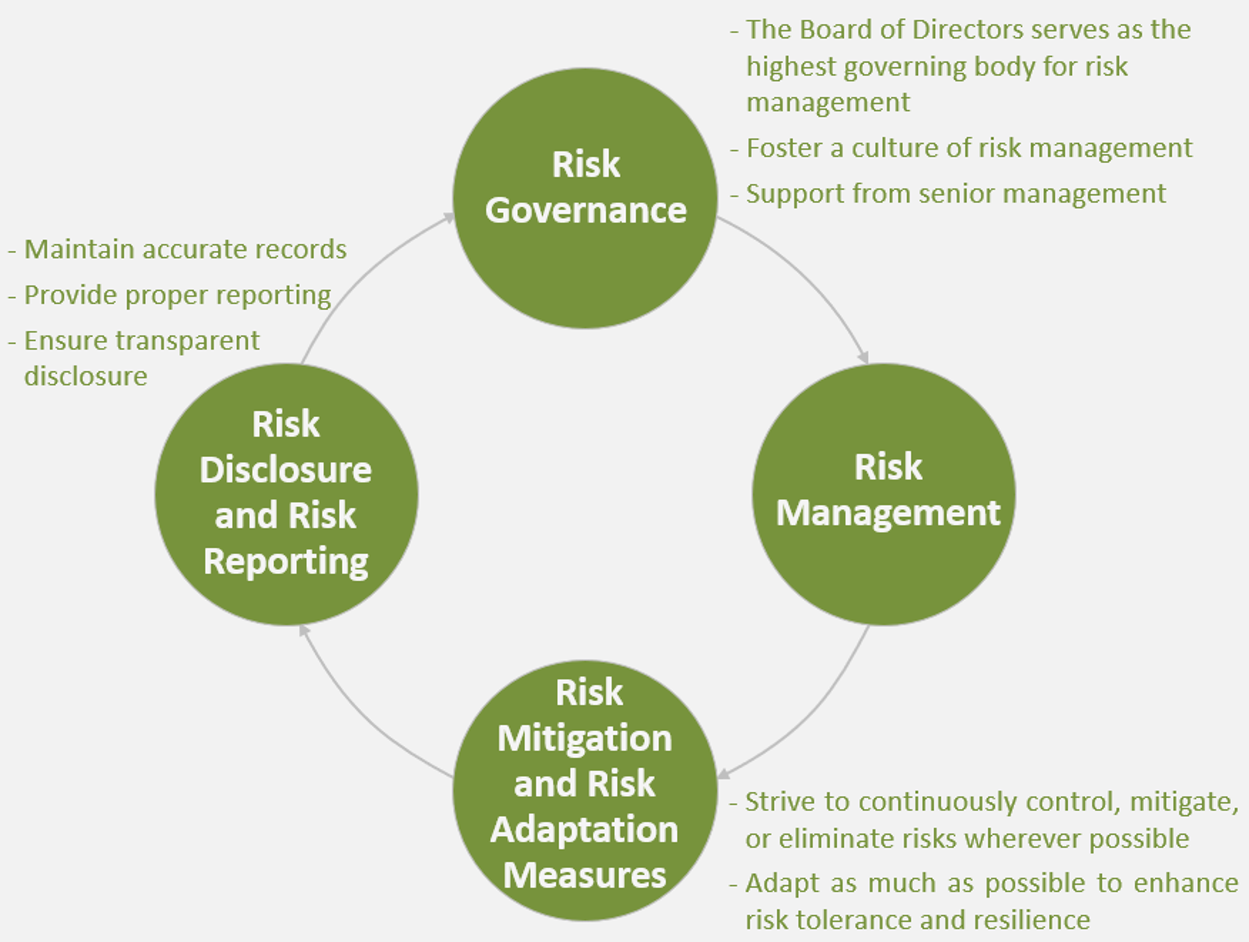
In 2022, E Ink Holdings' Board of Directors approved the "Risk Management Policy and Procedure" and established the Sustainability Development Committee, which is responsible for overseeing risk management mechanisms. The committee supervises risk-related operations and submits risk management proposals for Board approval. The company compiles and reports on the implementation of risk management measures at least once a year.


In 2025, the Chairman of the Board (who also serves as the highest-ranking executive of the Sustainability Development Committee) presented a risk management implementation report to the Board, detailing the risk assessment results across various areas. The report included control and monitoring procedures for higher-risk areas to ensure effective risk mitigation.


The Corporate Sustainability Committee reports on the implementation of risk management to the Board of Directors as follows:


May 08, 2025

11th meeting of the 12th Board of Directors

  • Report on the implementation and performance of sustainable development, execution of risk management, stakeholder communication, and the greenhouse gas inventory and verification results of E Ink and its subsidiaries


Risk Management Organization

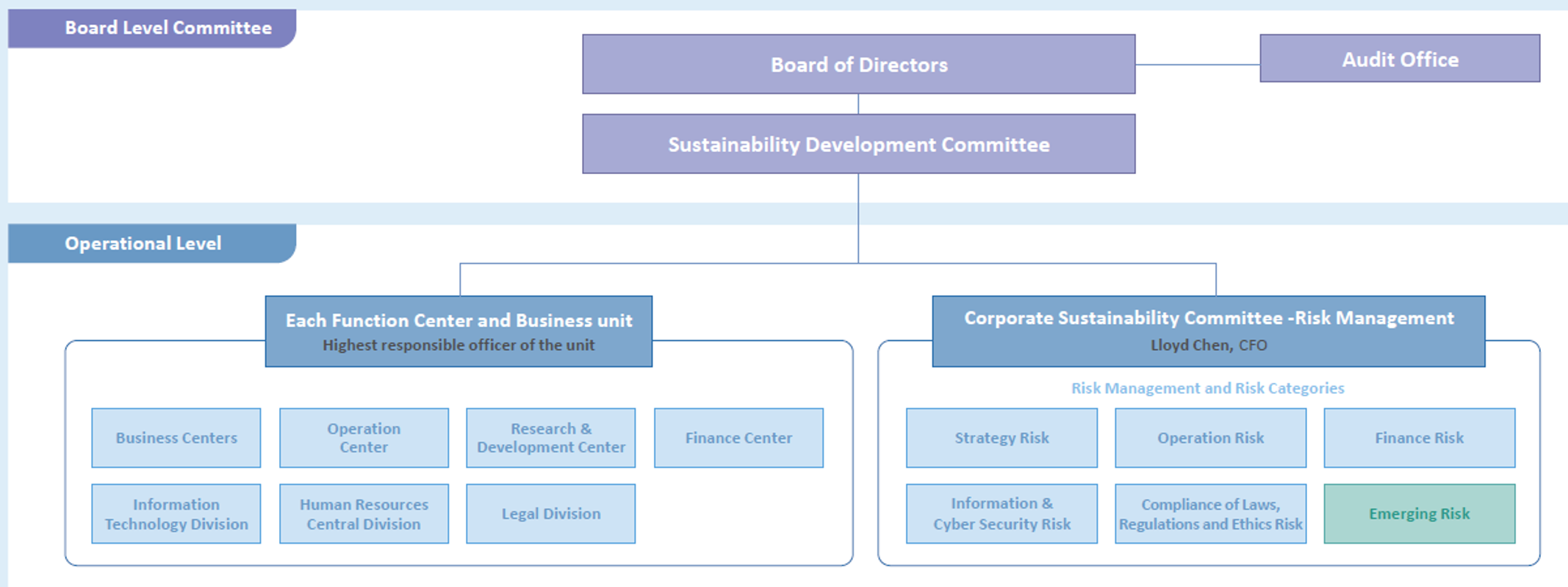
E Ink structures its risk management organization based on the Three Lines of Defense Model. The Board of Directors serves as the highest governing body of risk management and is responsible for risk oversight, with the Chairman supervising risk governance. At the operational level, each risk issue is linked to organizational functions. Each function center and business unit serve as the First Line of Defense, where the highest responsible officer of the unit manages and responds to risk issues. They implement mitigation and adaptation strategies to reduce the potential impact of risks on operations, ensuring the achievement of operational objectives.


The Second Line of Defense is managed by the Risk Management sub-committee of the Corporate Sustainability Committee, which is independent of the operational units. This sub-committee sets control standards, oversees compliance, supervises the implementation of risk management and provides risk-related expertise and assistance to the operational business units to ensure the achievement of risk management objectives.


The Chief Financial Officer oversees and manages this process. The responsible operational units and the Risk Management sub-committee of the Corporate Sustainability Committee hold quarterly cross-departmental and cross-regional meetings to conduct risk sensitivity analysis and stress tests, maintaining a proactive and comprehensive risk management mechanism. The Sustainability Development Committee of the Board of Directors regularly reviews the risk management implementation status, offers necessary improvement suggestions, and periodically reports the effectiveness of risk management to the Board.


The Third Line of Defense is the Audit Office, responsible for the internal audit of E Ink's risk management. Following the risk management procedures, the Audit Office conducts annual risk management audits, performing independent and objective audits according to the Risk Management Policy and standards. This ensures the effectiveness and adequacy of the risk management, control, and governance processes, thereby enhancing the value of the organization's risk management.


Note: At least twice a year. In addition, risk reviews at least twice a year.

Risk Management Policy

• The Company shall observe principles of continuity and materiality, comply with relevant laws and regulations, and take the initiative to implement total risk management.

• The Company shall persistently monitor changes in the internal and external environment, occurrence of new issues, and analyze operational impacts while at the same time identify the associated risks and opportunities, so that actions can be taken to improve operating performance and resilience and realize the Company’s continuity commitments for the best interest of stakeholders.


*The formulation of Risk Management Policy and Procedures is based on and follows the "ISO 31000 Risk management–principles and guidelines" and the Financial Supervisory Commission’s “Risk Management Best-Practice Principles for Taiwan Stock Exchange and Taipei Exchange listed Companies.”


Risk Management Procedure

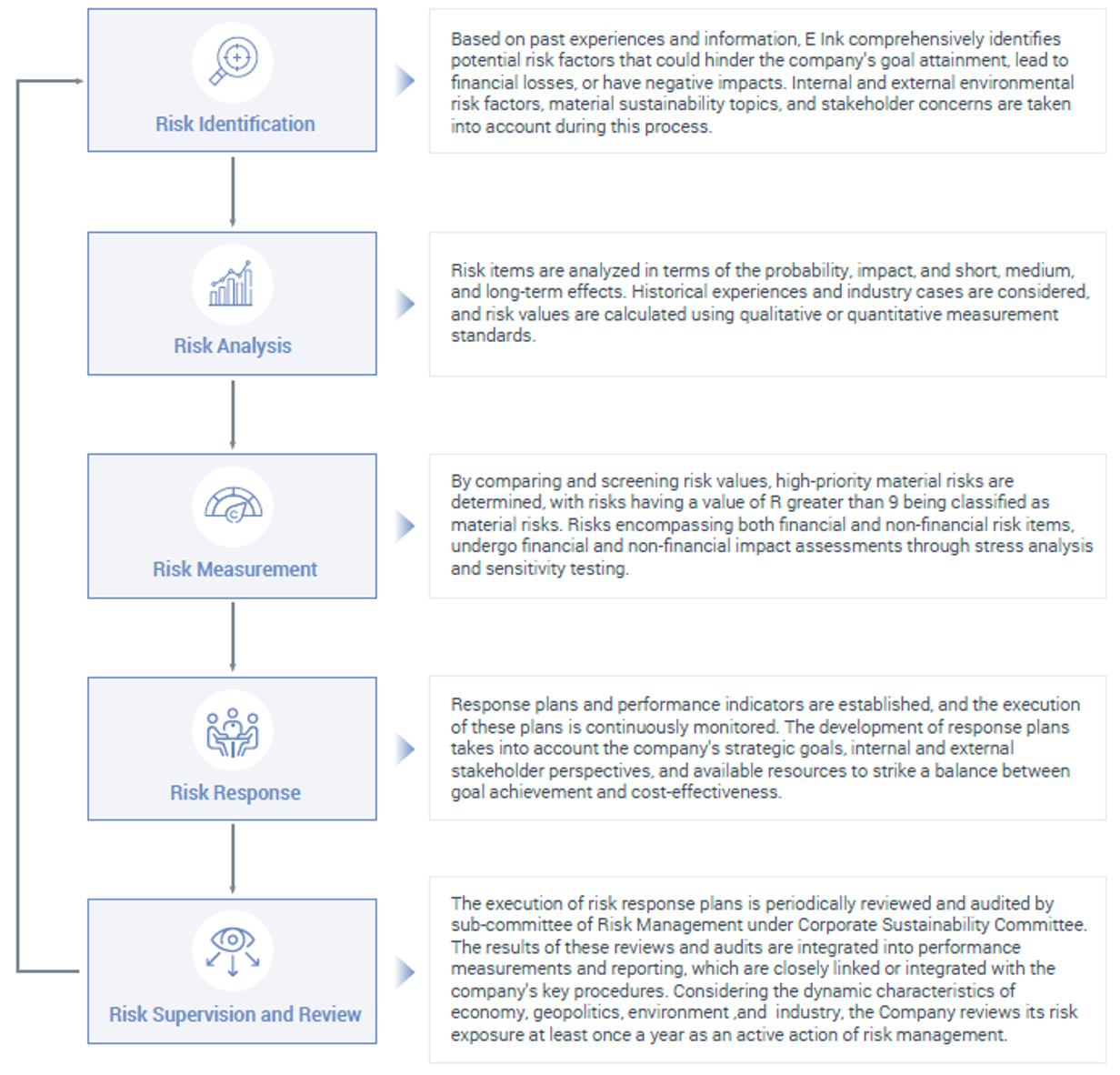
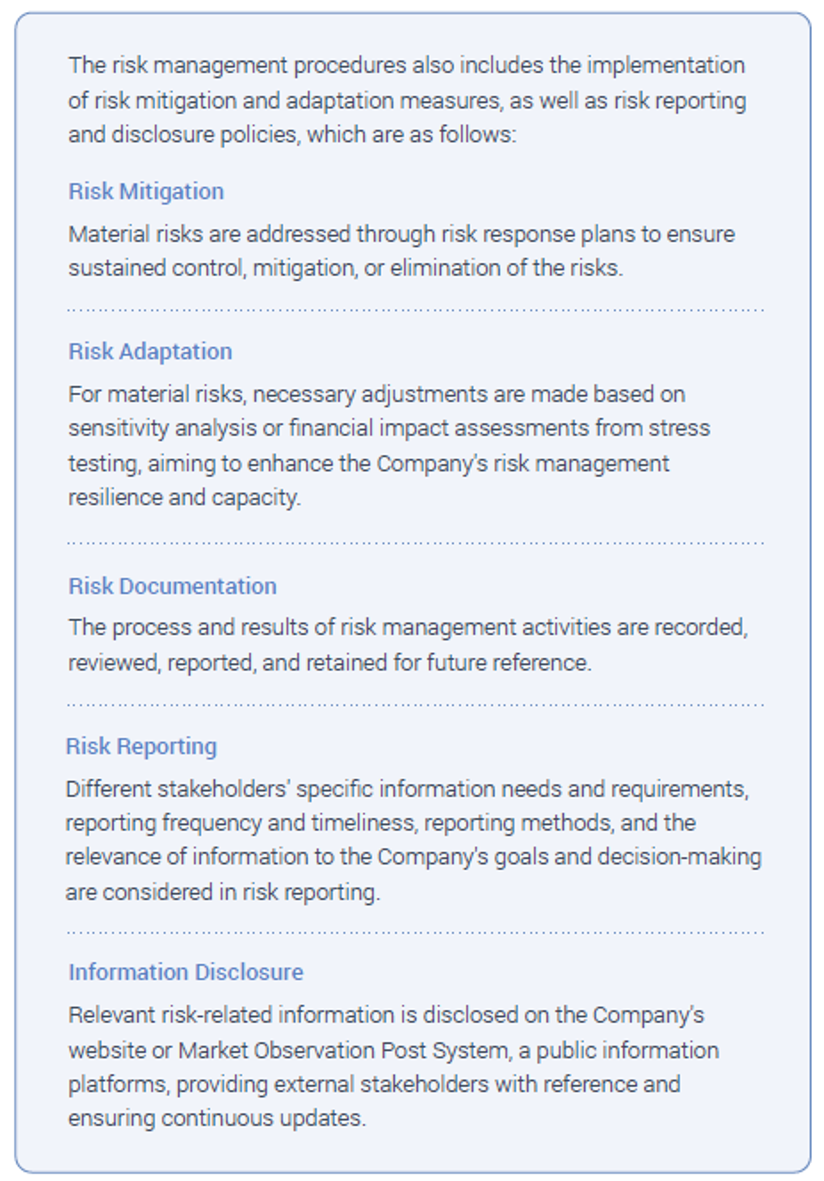
E Ink's risk management process encompasses five key procedures: risk identification, risk analysis, risk assessment, risk response, and risk monitoring and review. These procedures are conducted in a cyclical manner to ensure effective risk management.

Identification of Corporate Risk

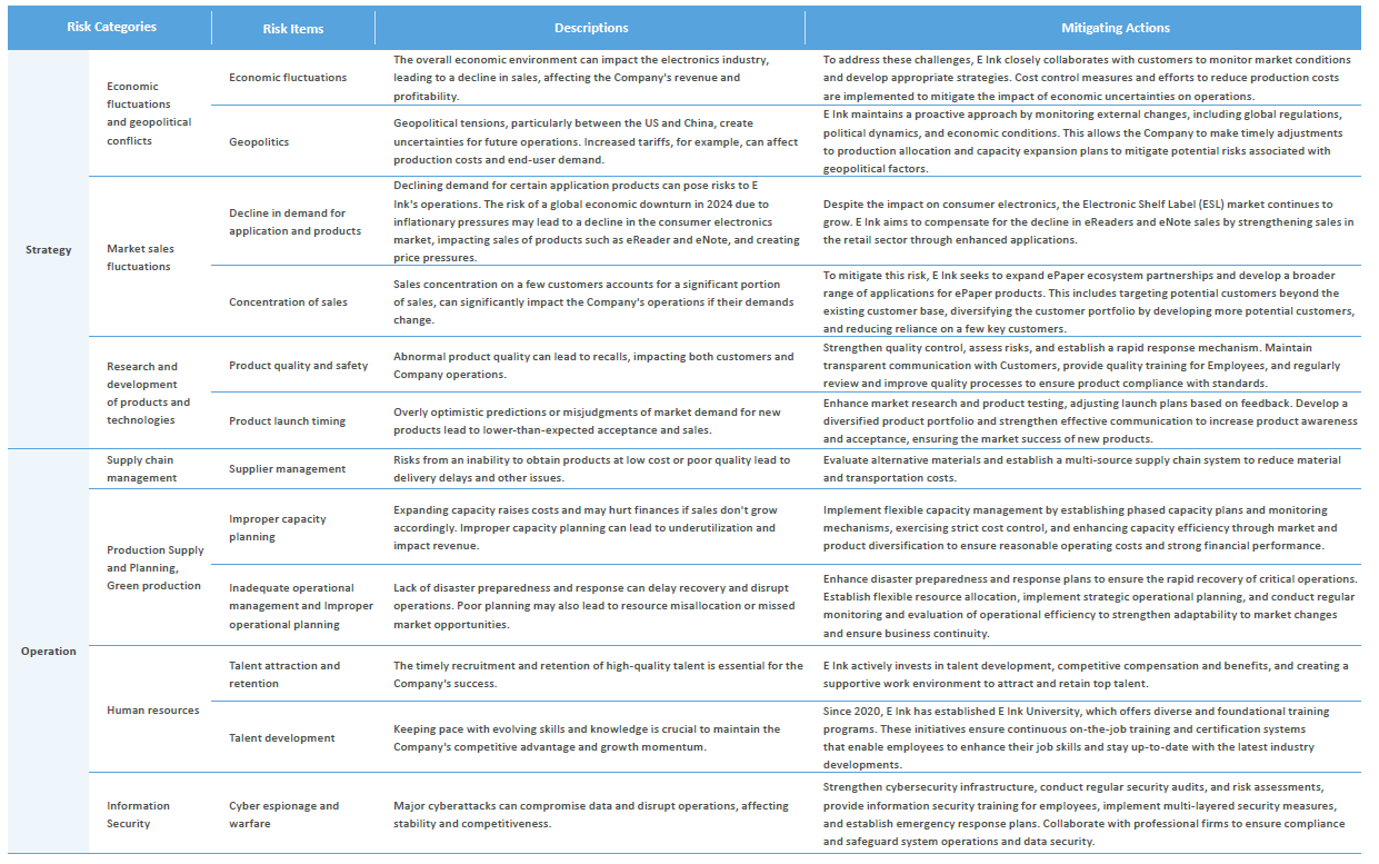
In accordance with the Risk Management Policy and Procedures, E Ink has identified 65 potential risk items, including strategic risks, operational risks, financial risks, information security risks, compliance and integrity risks, and emerging risks. These risks have been comprehensively identified as potentially hindering the Company's goal achievement or causing losses or negative impacts. Although emerging risks currently have no significant impact on operations, potential medium to long-term effects are expected.

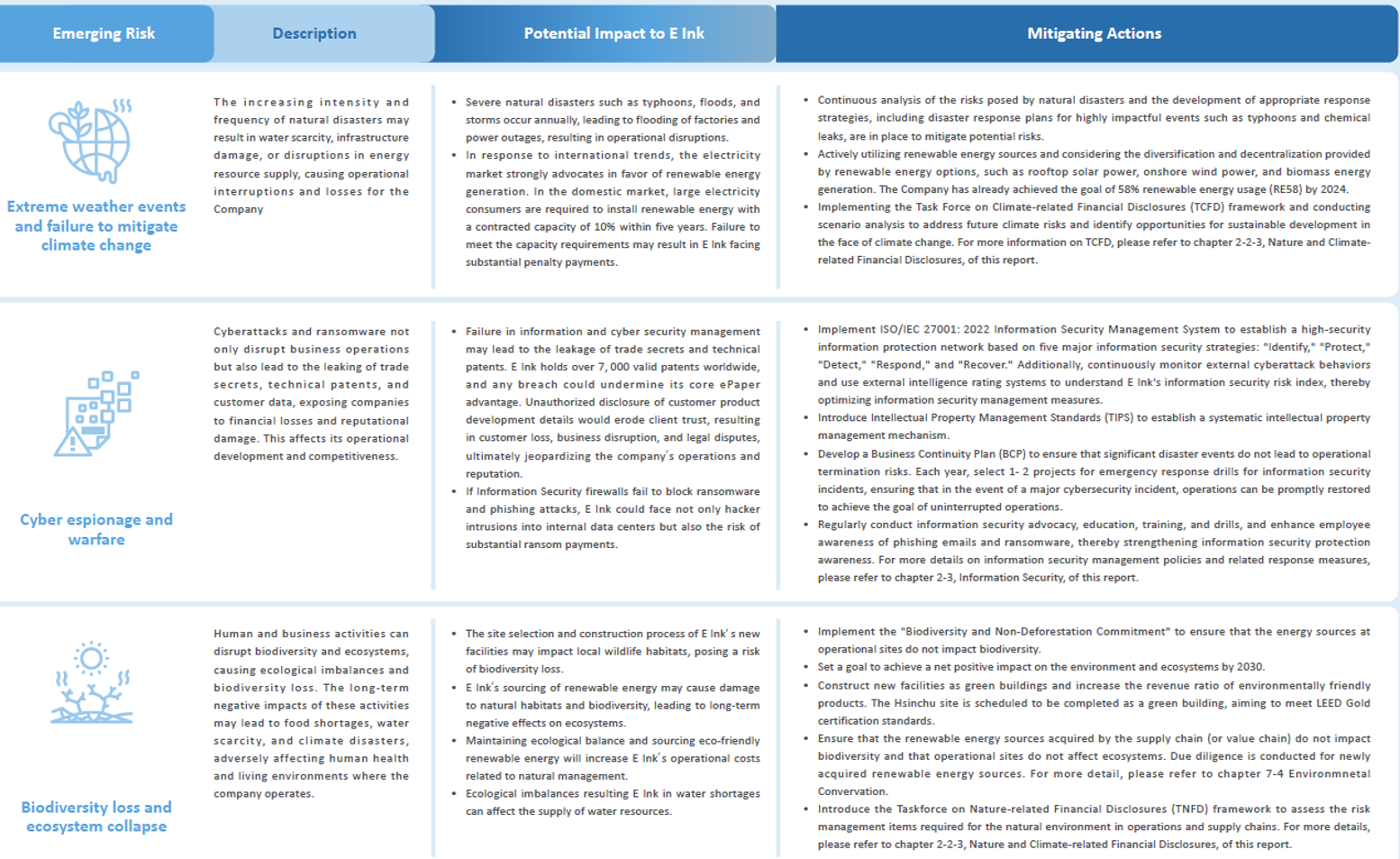
E Ink has referred to the World Economic Forum's " 2024 Global Risk Report" and " 2025 Global Risk Report" to identify three emerging risks closely related to its operations.


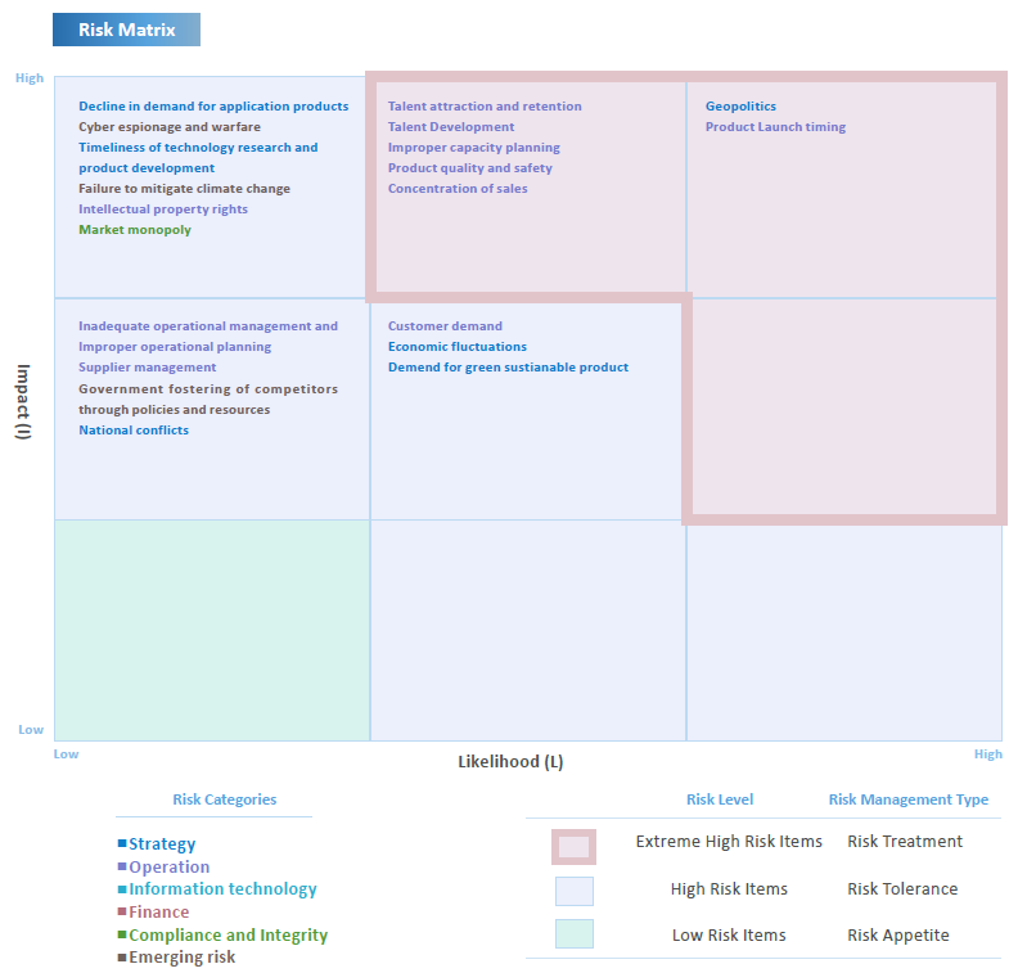
E Ink uses impact (I) and likelihood (L) as risk quantification metrics to identify and review risk exposure. The risk identification survey was completed by the global function center heads and Associate Vice Presidents and above, assessing the risk exposure based on the likelihood and impact of financial, strategic, operational, and other financial and non-financial indicators within their scope of duties. These items were then categorized into three levels of risk with corresponding management measures, including:


• Low Risk Items: These are within the interval of risk appetite, indicating that E Ink is willing to accept these identified risk items. Appropriate management strategies are needed to monitor and maintain risks at this level.

• High Risk Items: These fall within the interval of risk tolerance, necessitating proactive management strategies to ensure risks are controlled within acceptable limits.

• Extreme High Risk Items: These are within the interval of risk treatment, indicating that the risk level extremely exceeds E Ink's risk appetite. This requires necessary mitigating actions with designated responsible functions to conduct risk treatment measures and reduce the risks to a controllable level.


In 2025, a total of 20 significant risk items were identified, including 7 extremely high-risk items and 13 high-risk items. These were further consolidated and classified into 2 major risk themes, strategic and operational, and 7 risk categories for critical risk management. Compared to the risk identification results of 2024, the number of extremely high-risk items decreased from 13 to 7, achieving the target reduction rate for high-risk items. However, due to factors such as economic, industry, and geopolitical changes, as well as the expansion of operational scale, E Ink will continue to control, mitigate, or eliminate risks to enhance risk tolerance and resilience. 
Risk Identification and Countermeasures of Strategic, Operational and Financial Risks Strategy

Emerging Risks Identification and Mitigation Strategies