E Ink Actions|E Ink ESG Website

Product Carbon Footprint
Product life cycle and carbon footprint

Methodology and Scope of Inventory
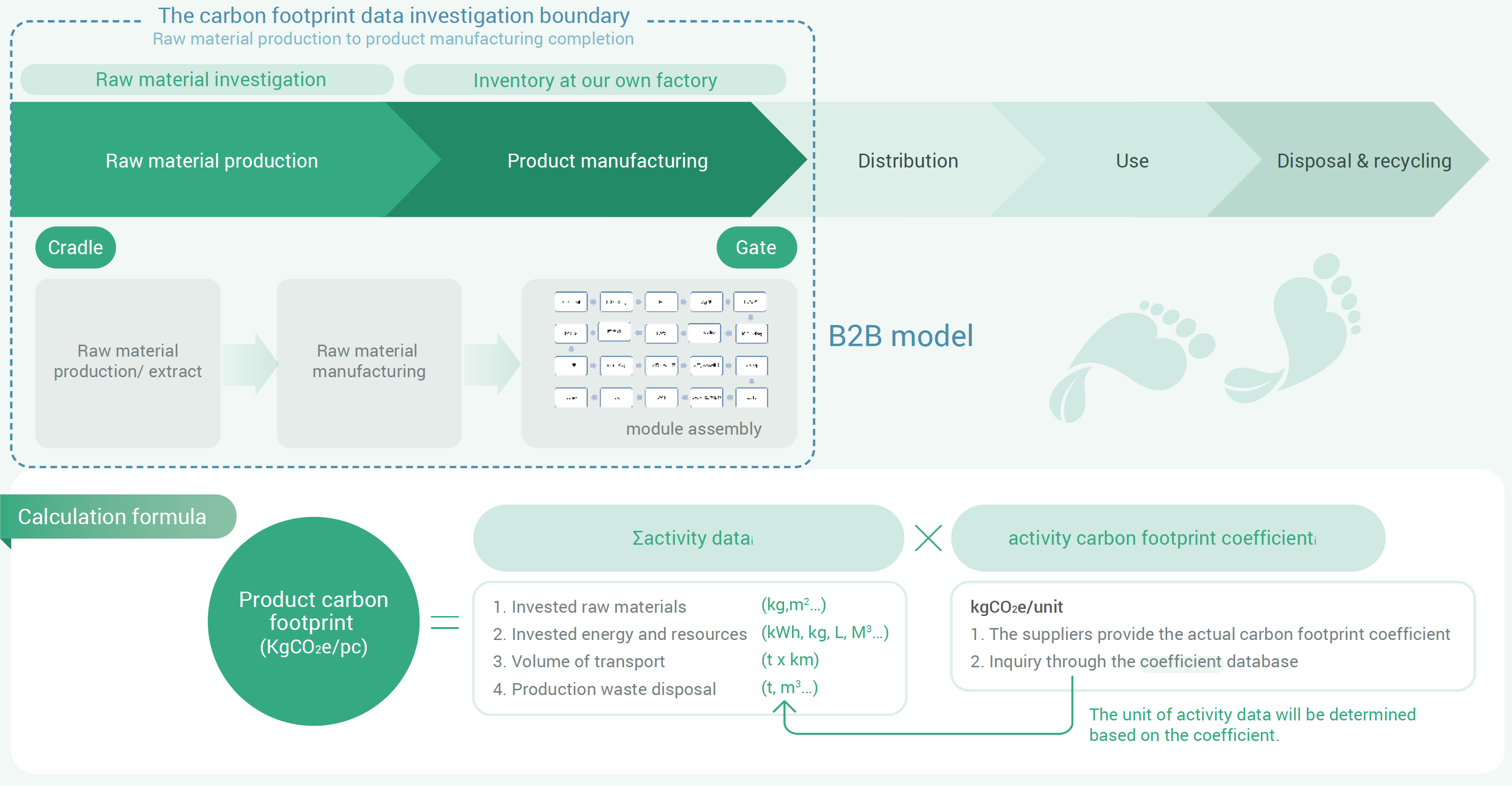
In accordance with the ISO 14067:2018 standard: We compile information based on the principles of completeness, consistency, accuracy, relevance and transparency, set thorough regulations on the GHG emissions throughout the product life cycle, and make impact assessment.


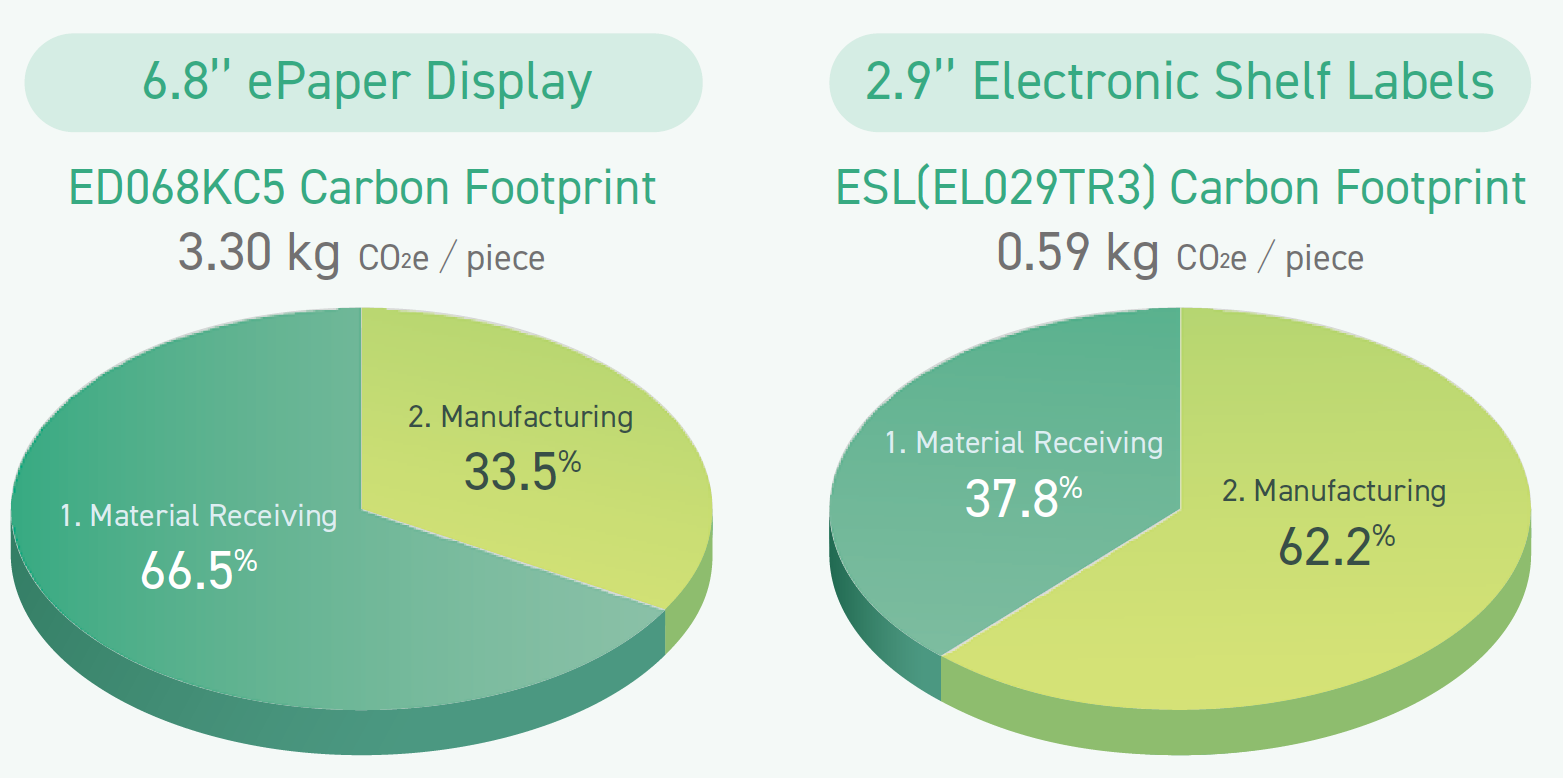
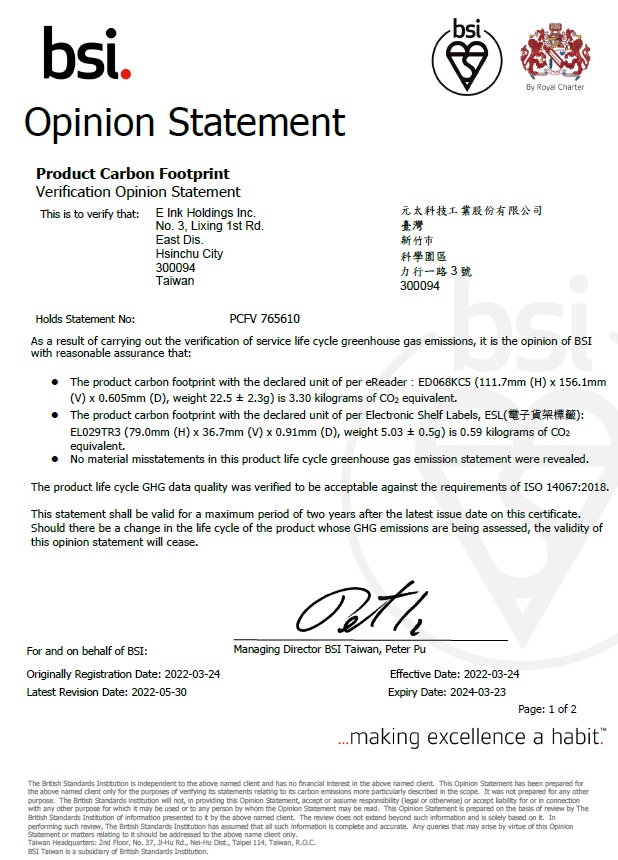
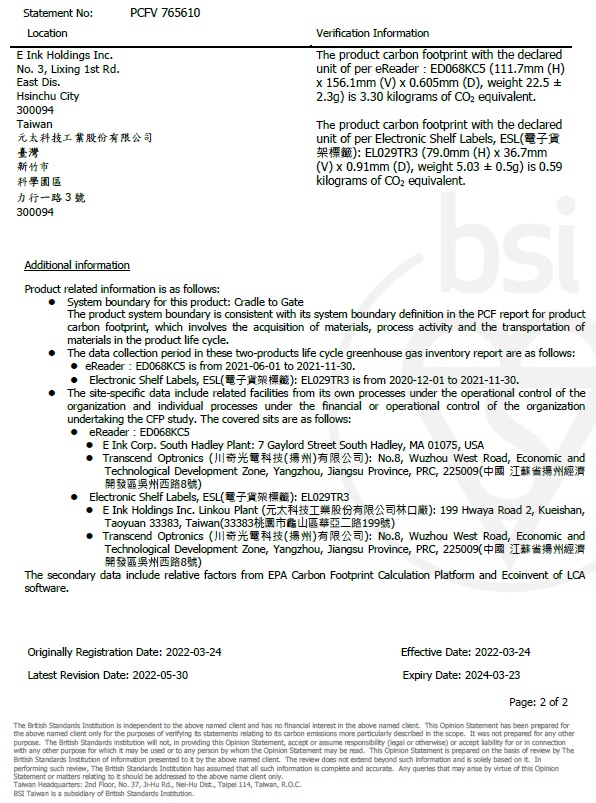
The target products of the carbon footprint inventory this time were 6.8" EPD and 2.9" ESL. The inventory focused on all the GHG during the material receiving and manufacturing stages, etc. throughout the life cycle of the target products made within December 1, 2020 to November 30, 2021.
Results and Third-party Assurance

The data and supporting materials of this inventory were verified and assured by the external third party, British Standards Institution (BSI), in compliance with the ISO 14067:2018 standard in March 2022, and the verification statement of reasonable level of assurance has been obtained.


During this product carbon footprint inventory and the verification process, we found that the TFT substrate of the material receiving stage and the electricity and energy use of the manufacturing stage are the major hotspots of salient issues.


The Company accordingly incorporates the development of specific carbon reduction projects and objectives into the long-term improvement strategies in the hope of continuously enhancing the environmental management performance with the joint implementation in the value chain. Our carbon footprint is expected to decrease gradually in the future, and we will steadily work towards the goal of

40% use of renewable energy by 2025, 100% use of renewable energy by 2030, and net zero carbon emissions by 2040.

6.8" ePaper Display and 2.9" ESL Carbon Footprint

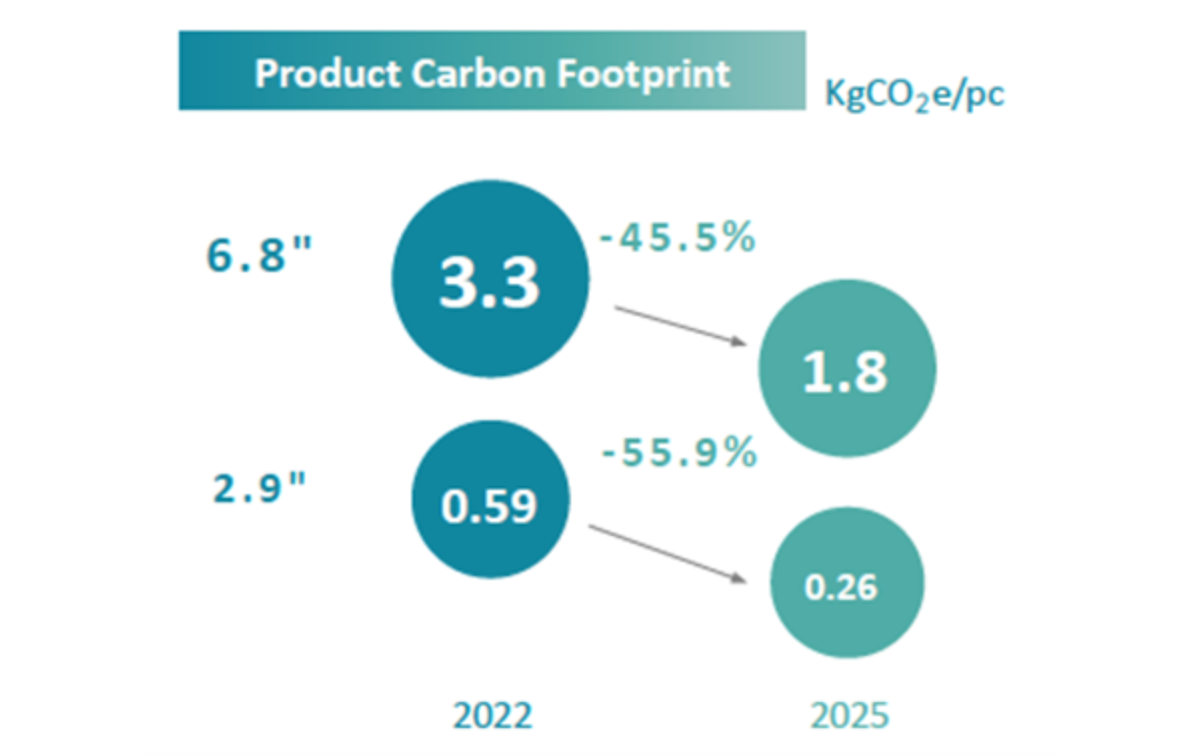
In 2025, E Ink further enhanced the environmental benefits of its products. Compared to 2022, the carbon footprint of the same specification eReader module was reduced by 45.5%, while the ESL module achieved a 55.9% reduction. E Ink implements a systematic approach to carbon footprint management, encompassing inventory, evaluation, and action, to continuously optimize the environmental performance of its products. By adopting renewable energy and reducing the carbon footprint of materials, E Ink is actively driving down product carbon footprint, demonstrating its commitment and contribution to environmental protection.

Product Life Cycle Assessment

Note: The assessment has been completed, with third-party verification currently in its final stage and expected to be completed in Q4 2026.

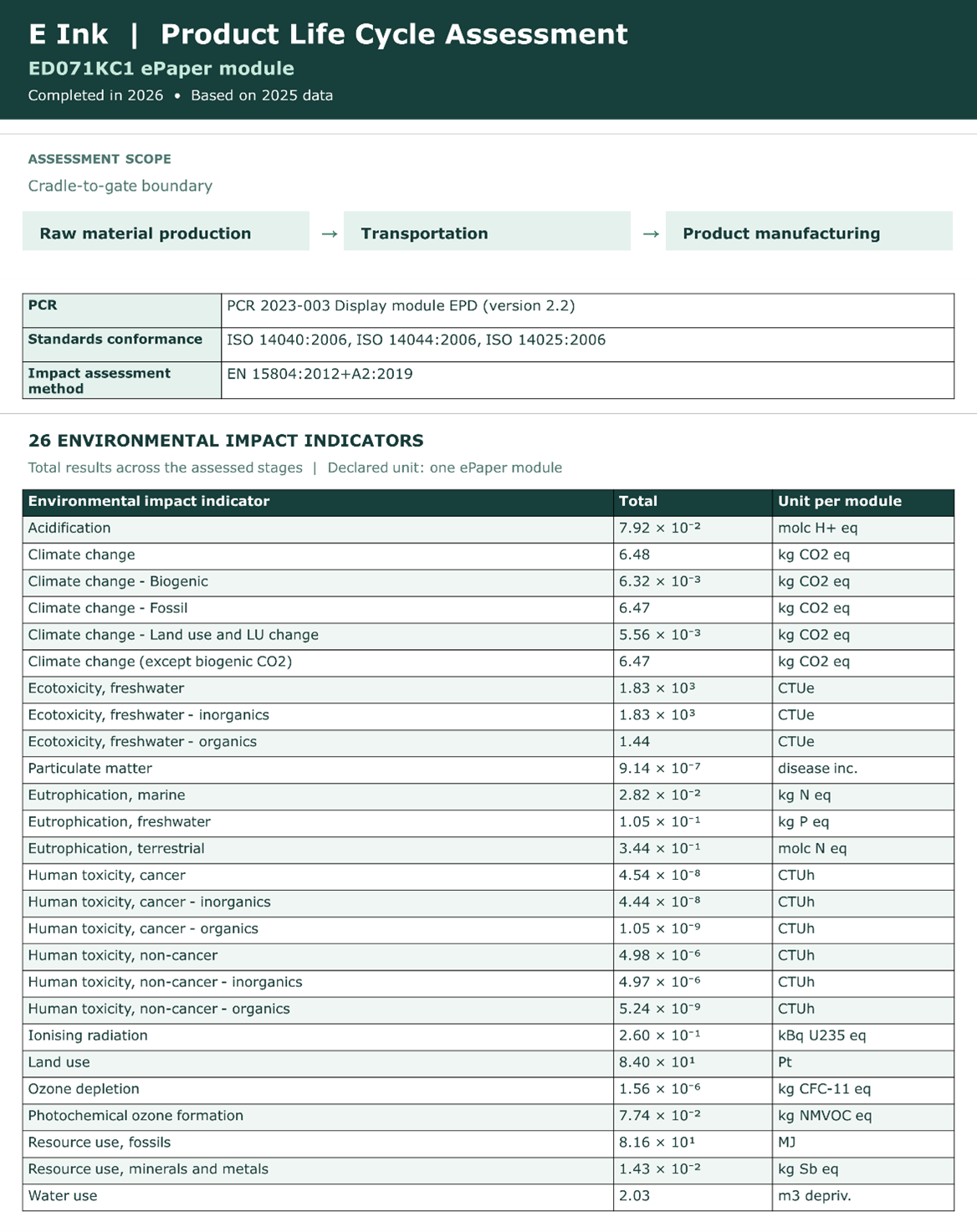
In 2026, E Ink completed a life cycle assessment of its ED071KC1 ePaper module using 2025 data, in accordance with ISO 14040, ISO 14044, and ISO 14025. The assessment adopted a cradle-to-gate system boundary, covering raw material acquisition, inbound transportation, and manufacturing. It evaluated 26 environmental impact indicators, including abiotic depletion (fossil fuels, minerals and metals), land use, water depletion, acidification, particulate matter, ecotoxicity, eutrophication, global warming, ozone depletion, photochemical ozone formation, human toxicity, and ionizing radiation. The assessed product accounted for 14% of total product shipments in 2025, calculated by dividing the number of assessed product units shipped by the total number of product units shipped.